ServicesResidential Roofing
Residential Roofing in Richardson
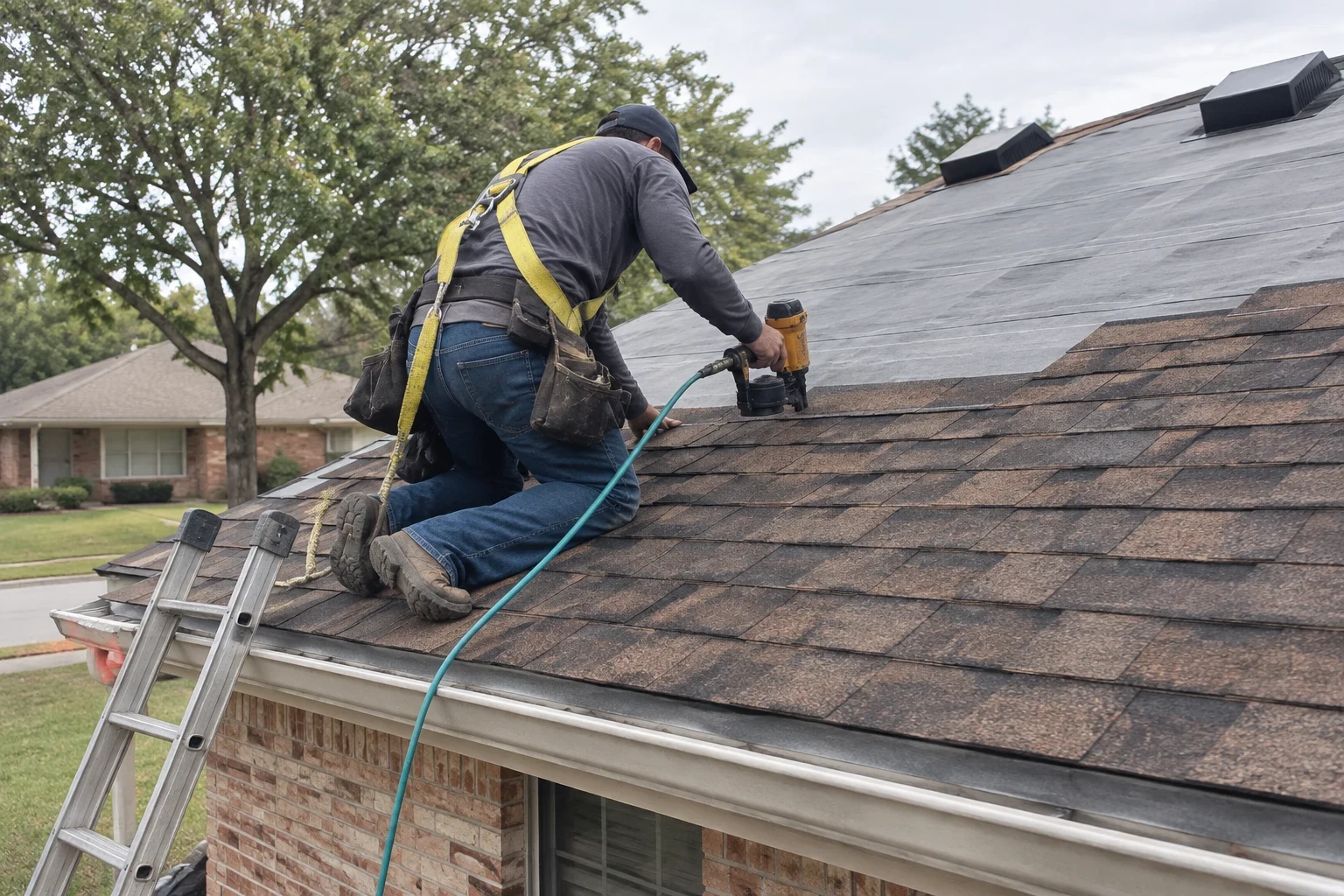
We put new roofs on homes and handle the paperwork that comes with them. We pull the permit and build every detail to the code the inspector checks. Then we stay until the job passes. You get a roof that works and a clean record on file.
A new roof, built the way the code reads
Residential roofing is a full roof system for your home. That means the decking, underlayment, flashing, vents and shingles, all installed together so they shed water as one piece.
Most of what goes wrong on a roof starts with a shortcut nobody sees from the street. Nails in the wrong spot. Old flashing reused. A second layer of shingles laid over a first when the code says otherwise. We don't do those things. Each step follows the building code, and the city inspector gets to see the work.
Many homes around Richardson and nearby towns like Plano and Garland were built decades ago, and some still have plank decking under the shingles. We check for it and plan around it so it doesn't turn into a surprise on tear-off day.
What comes with your new roof
Permit handled by us
We file it with the city under our name before work starts. You don't need to make a trip downtown or deal with any of the paperwork.
Full tear-off to the deck
Old shingles and felt come off until we're looking at bare wood. With the deck exposed, we can find soft or rotted spots and fix them before any new layers go down.
Decking brought up to standard
Rotted boards get replaced. Gapped plank decking gets covered with new sheathing when the shingle maker or code calls for it. We show you photos before we do it.
Underlayment, flashing and drip edge
New underlayment across the deck, new metal at walls, chimneys and valleys, and drip edge at the eaves and rakes. We do not reuse old flashing.
Shingles nailed to spec
Shingles go on with the nail count and placement the manufacturer and code require for wind. Impact-rated shingles are an option if you want them.
Ventilation and cleanup
We balance intake and exhaust vents so the attic can breathe in summer heat. At the end we run magnets for nails and haul off every scrap.
Signs your home needs a new roof
- Granules in the downspouts
- Shingles shed their gritty coating as they age. Once the asphalt underneath shows, the sun breaks it down fast.
- Curling or cracked shingles
- Edges that lift or crack let wind get under them. That usually means the whole roof is near the end, not just one spot.
- Patches that keep failing
- If the same area leaks again after it was patched, the problem is often the deck or flashing under it.
- Two layers already on
- Code does not allow a third layer of shingles. If yours has two, the next roof has to start with a full tear-off.
- Daylight or stains in the attic
- Light through the boards or dark rings on the wood mean water is getting in. Look on a sunny afternoon with the attic light off.
How the job runs
- 1
Free estimate at your home
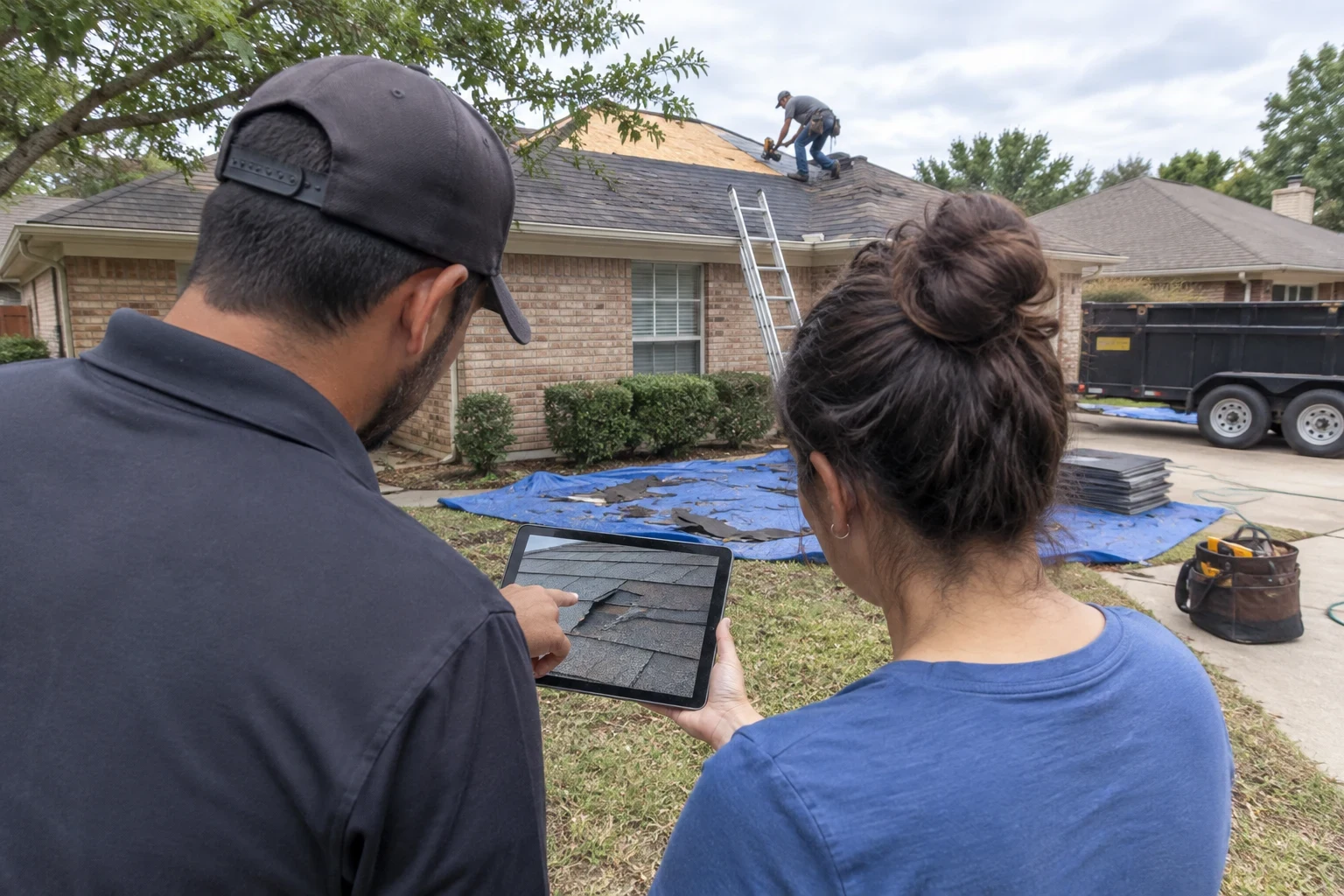
We climb the roof, check the attic from inside, and take measurements and pictures. The estimate comes to you in writing, line by line, with any decking we think will need replacing called out.
- 2
Paperwork and scheduling
We file with the city and set a start date. Materials are delivered a day or so ahead, placed where they won't block your driveway if we can help it.
- 3
Tear-off and build
We cover plants and tarp the sides of the house, strip the roof, and fix the deck. Then we install the new system. Most homes are done in one or two days.
- 4
City inspection
We schedule the inspection and meet the inspector. If anything needs a correction, we fix it and get it signed off.
- 5
Wrap-up and records
Before we pack up, we stand in the yard with you and point out the new flashing, vents and drip edge. You keep the job photos and the signed city paperwork for your files.
What goes into the cost of a new roof
Every roof gets its own number. We take measurements, look at what's under the shingles and write down each cost. A few problems only appear once the old roof is off, and if that happens, you see photos and the extra cost before we do any added work.
- Roof size and steepness
- Roofing is priced by the square, meaning 100 square feet. More roof means more bundles and more labor. Steeper roofs slow the work and need harnesses and roof jacks.
- Old layers coming off
- A roof with two old shingle layers takes longer to strip and needs more dump runs.
- State of the decking
- Replacing rotted boards, or sheathing over plank decking, adds material and a few more hours.
- Type of shingle
- Impact-rated shingles cost more than standard architectural ones. Hail is common in North Texas, so some homeowners pick impact-rated, and some insurers offer credit for them.
- Flashing details
- Every chimney, skylight, valley and wall needs flashing. The more there are, the more metal and handwork the job takes.
Residential roofing questions
- Do I really need a permit for a new roof?
- In Richardson and most nearby cities, yes, a new roof generally needs one. We take care of it and meet the inspector. A roof done this way is on record with the city, which helps when you sell or file an insurance claim later.
- Can you lay new shingles on top of the old roof?
- Code does allow one overlay in some cases, but we almost always tear off. Leaving the old layer means nobody ever sees the wood underneath. If two layers are already on, tearing off is the only option the code leaves you.
- Will insurance pay for my roof?
- That depends on your policy and what the adjuster finds. We are not the adjuster and can't decide your claim. We can explain what the paperwork says and make sure the work matches the code items listed.
- How messy is it, and do I need to leave?
- It's loud during tear-off, but you can stay home. We tarp the sides of the house, cover plants, and keep the driveway as clear as we can. Cleanup includes a magnet sweep for nails.
- Do you roof commercial buildings too?
- Yes. Flat and low-slope roofs on businesses are a different system, so we cover them on our Commercial Roofing page.
Find out what your roof needs
We'll come out, look at the roof and attic, and give you a written estimate with city fees and every line item included. It costs you nothing.