ServicesCommercial Roofing
Commercial Roofing in Richardson
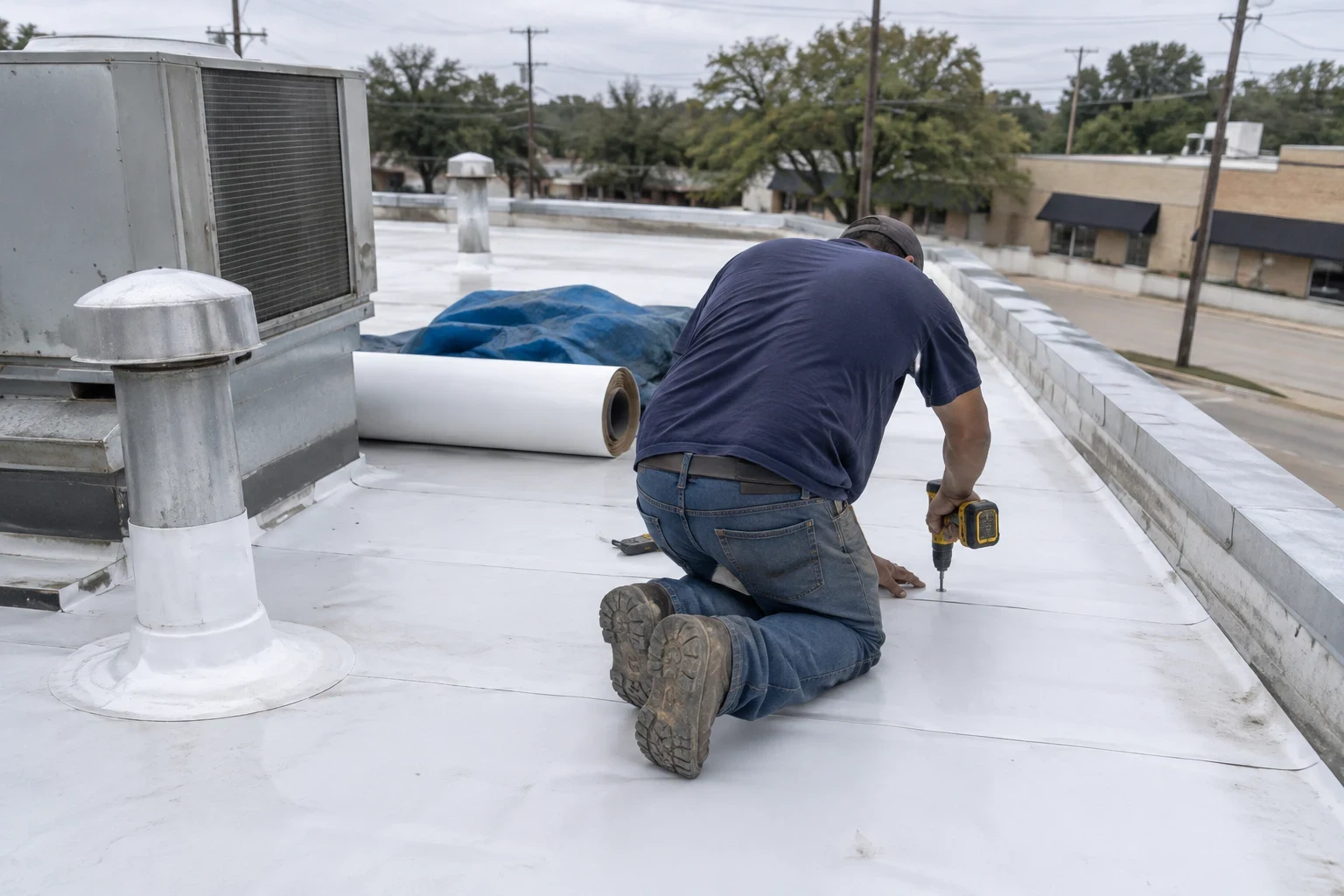
We install commercial roof systems on low-slope and metal buildings. That means TPO, modified bitumen and metal panels, plus the insulation, flashing and drainage work under them. We pull the permit, build to the adopted code and walk you through each city inspection.
What commercial roofing covers
A commercial roof is a different animal from a house roof. Most are low-slope, so water moves slowly. The membrane, the seams and the drains do all the work. A small mistake at a curb or a drain shows up as a stain on a ceiling tile months later.
Commercial roof work almost always needs a permit. When the old roof comes off, the energy code can also require insulation to meet current levels. We explain those rules before the job starts, so the price you see already covers them.
We work on offices, retail strips, small warehouses, churches and similar buildings in Richardson and nearby towns like Plano, Garland and Addison.
What the work includes
- Permit and plan review
- We file with the city and supply the details the reviewer asks for. That includes the roof system, the insulation and the attachment method. You do not have to deal with the paperwork.
- Tear-off down to the deck
- We take the old layers off and look at the deck before anything new goes on. Rusted metal deck or soft wood gets flagged, with photos, before we keep going.
- Insulation to current code
- Tapered or flat insulation boards go down to meet the energy code and steer water to the drains. Tapered layouts also fix the low spots where water used to sit.
- Membrane or metal system
- We install TPO, modified bitumen or metal panels, chosen for your building and budget. Seams are welded or sealed and fasteners follow the pattern needed for wind uplift.
- Flashing at every opening
- Rooftop units, curbs, pipes, parapet walls and edges get proper flashing. These are where most low-slope leaks start, so we take our time on them.
- Drains, scuppers and cleanup
- Drains and scuppers are set and sealed, and overflow paths are kept clear as code requires. We haul off the debris and sweep the lot for nails each day.
Signs your building needs a new roof system
Water sitting for days
Ponding that lasts more than two days after rain means the slope or the drains are not working. Standing water ages a membrane fast.
Seams pulling apart
Open laps on a membrane or loose seams on metal panels let water run under the roof. Once that starts, the insulation below gets wet.
A deck that gives under your boots
A roof that sinks a little with each step usually has soaked board under the membrane. That board stays wet once it takes on water, and it stops insulating.
Blistering and cracking
Bubbles, alligator cracking or bare spots on an older built-up or modified roof mean the surface has worn through. North Texas sun and hail are hard on these surfaces.
Repeat ceiling stains
Stains that come back after every patch usually point to a roof at the end of its life, not one bad spot.
How the job runs
- 1
Free roof estimate
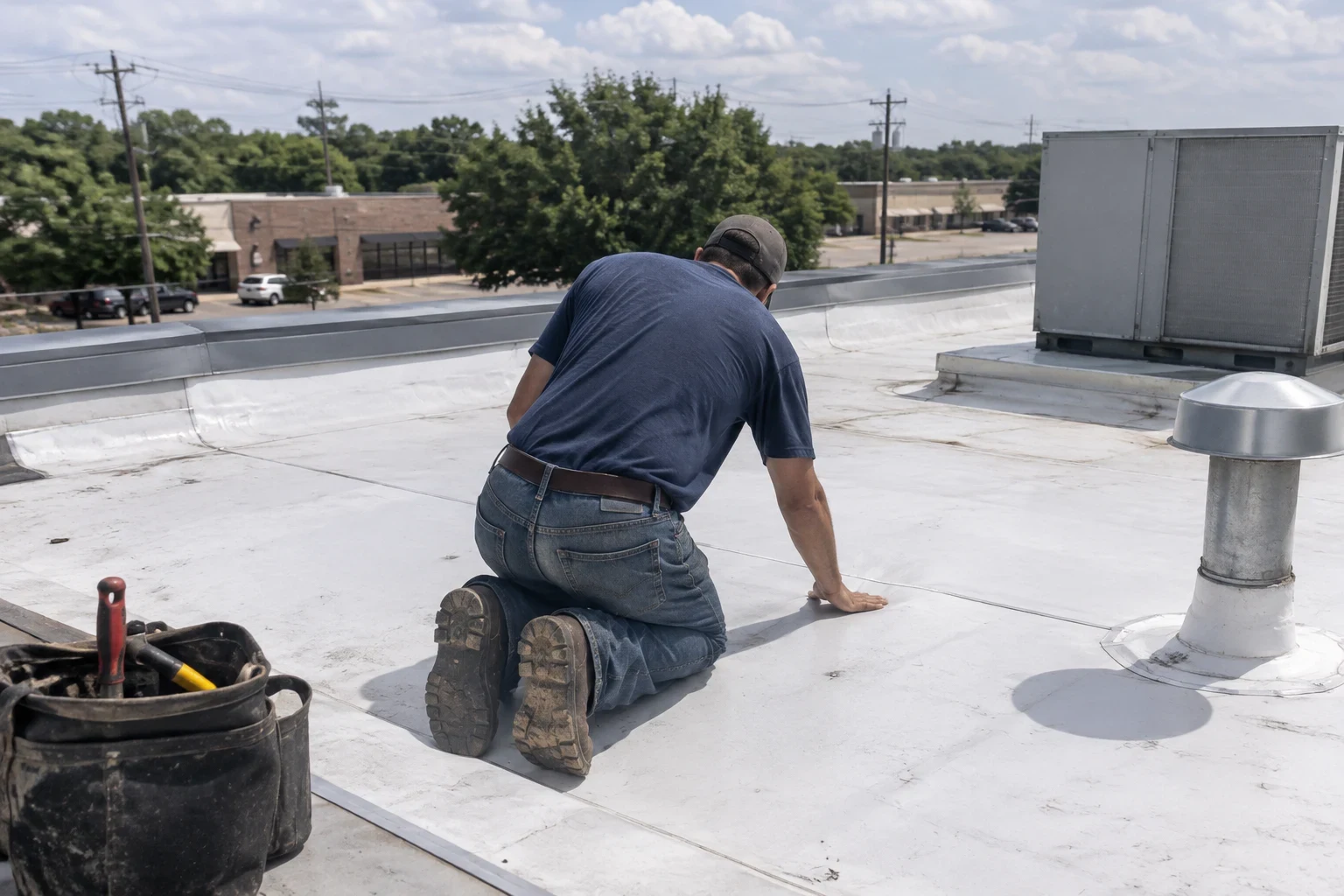
We climb up and check the membrane, flashing and drains, and take core cuts when we need to see the layers below. Your written estimate breaks the job into its parts.
- 2
City filing and start date
We handle the city filing and choose a start date that fits around your business hours when we can. You'll know ahead of time where the dumpster and material lift will go.
- 3
Old roof off, new system on
Every day we strip only a section we can finish before evening. That same section gets its insulation, membrane and flashing before we leave, so the building stays dry each night.
- 4
Inspection and final walk
A city inspector compares the finished roof to the approved plans. After that we go up with you and show you the drains and anything that needs to stay clear.
What moves the price
No two commercial roofs come out to the same number. Size, the old layers and what sits on top all change it. Your written estimate breaks out each part, so you can see where the money goes.
- Roof size and layers
- Square footage sets the base. Each old layer that has to come off adds labor and disposal.
- Insulation required by code
- If the code calls for more insulation than you have, that board goes in the price. Tapered insulation to fix drainage adds more.
- System choice
- TPO, modified bitumen and metal each cost differently to buy and install. Membrane thickness also changes the number.
- Penetrations and rooftop units
- Every curb, pipe and unit needs its own flashing. A roof crowded with equipment takes longer than a clean one.
- Deck condition and access
- Damaged deck found at tear-off is priced separately and shown to you first. Tight access or a tall building can mean extra lifting equipment.
Commercial roofing questions
Something not covered here? (972) 433-9803
Does a commercial roof need a permit in Richardson?
Yes, commercial roofing work generally needs a city permit. We file it and handle the inspections. The fee is listed on your estimate, not added later.
Why would the code make me add insulation?
When a roof is torn off down to the deck, the energy code usually treats it like new work. That can mean bringing insulation up to current levels. We tell you up front if your building falls under that rule.
Can my business stay open during the work?
Most of the time, yes. We open and close sections the same day and keep walkways and entrances clear. Some noise and smell from adhesives is normal, and we will plan around your busiest hours where we can.
Which system is best, TPO, modified bitumen or metal?
It depends on the building. TPO is light and reflects heat, modified bitumen handles foot traffic well, and metal suits steeper or pre-engineered buildings. We will tell you which one fits and why.
How long does a commercial job take?
A small building may take a few days. Larger roofs or ones with a lot of rooftop equipment take longer, and rain can push the schedule. You will get a realistic timeline with the estimate.
Get your building's roof priced right
We will look at the roof, explain the code items that apply, and give you a written number. If your house needs work too, ask about our residential roofing.