ServicesCommercial Contracting
Commercial Contracting in Richardson
We take on improvement projects for offices, retail spaces and small commercial buildings. We pull the permit, plan around your business hours and walk every inspection with the city. You get a space you can open, lease or sell without a code problem hanging over it.
Commercial work runs on paperwork as much as tools
A commercial project has more rules than a house. The city wants drawings before it issues a permit. Inspectors check fire exits, restroom access and electrical loads. Larger jobs in Texas can also need an accessibility review under the Texas Accessibility Standards. Miss a step and the space sits empty while you wait on a reinspection.
We sort out the city approvals and code checks first, then build. That order saves the most time and money. It also means your landlord, your insurer and your next buyer can see the work was approved and passed inspection.
We work with business owners and property managers in Richardson and nearby cities like Plano, Addison and Garland. Jobs range from a single restroom update to a full refresh of a small suite.
What the work covers
Site walk and written estimate
We walk the space with you, measure and look at what is causing the problem. Every part of the job gets its own price on the estimate, so you know where your money goes.
Drawings and city filing
We put together what the city needs to review the job and file for the permit. If the reviewer asks for changes, we answer them and keep you posted.
Restroom and break room updates
Commercial restrooms have to meet accessibility rules for clearances, grab bars, fixture heights and door widths. We build to those rules from the start. Break rooms get the same care with sinks, outlets and ventilation.
Accessibility review on larger jobs
When a project is big enough to need a state accessibility review, we tell you up front. We plan for the review and the follow-up inspection so it does not surprise you at the end.
Inspections and final sign-off
We schedule each inspection and are on site when the inspector comes. When the city signs off, you get copies of the approvals for your records.
When it is time to bring us in
- A new lease or a new tenant
- Many leases require the space to be brought up to current code before move-in. We can tell you what the city will likely ask for before you sign.
- A change in how the space is used
- Turning an office into a shop, a studio or a food business can change the code rules for that space. Exits, restrooms and occupancy limits may all need another look.
- A failed inspection or a city notice
- If an inspector or fire marshal flagged something, we read the notice, explain it in plain words and fix what it lists.
- Restrooms that do not meet accessibility rules
- Narrow doors, missing grab bars or a sink at the wrong height are common in older buildings. These are worth fixing before a complaint or a sale forces the issue.
- Old work done without a permit
- Unapproved work can stall a refinance or a sale. We look at what was done and tell you honestly what it takes to make it legal or replace it.
How a project runs
- 1
Walk-through and estimate
We meet you at the building, look at the space and talk about how you use it. Then you get your written estimate with the city and inspection steps spelled out.
- 2
City approval and schedule
We file with the city and set a start date that works around your hours. If you need to stay open, we plan the work in sections or after closing.
- 3
The work
We protect floors and walkways, keep exits clear and close off the work area from your customers. At the end of each day the site is swept and safe to walk through.
- 4
Inspections and handoff
We meet each inspector, fix anything they note and get the final sign-off. Then we walk the finished space with you and hand over the paperwork.
What moves the price
Every commercial space is different, so we price each job after we see it. The biggest swings come from what the code requires and what we find once walls and ceilings are opened. Your written estimate shows each of these so nothing shows up later as a surprise.
- Size and scope
- A single restroom costs less than a full suite. The number of rooms and fixtures sets most of the price.
- Code and accessibility work
- Bringing exits, restrooms or door hardware up to current rules adds work. A larger job may also need a state accessibility review and its fees.
- Condition behind the walls
- Older buildings can hide outdated wiring, plumbing or framing. We note what we find with photos and talk with you before changing the plan.
- Working around your hours
- Night or weekend work to keep you open can add labor time. Staged work can stretch the schedule but keeps your doors open.
Questions business owners ask
- Do I really need a permit for this?
- Most commercial work that touches plumbing, electrical, walls or exits needs one. Cosmetic work often does not. We will tell you which side your project falls on at the walk-through, and if it does need one, we handle the filing.
- Can my business stay open during the work?
- Often, yes. We can phase the job, close off one area at a time or work after hours. We will be honest if a part of the job needs the space closed for a day or two.
- What is the Texas accessibility review?
- Larger commercial projects in Texas may need to be registered with the state and reviewed against the Texas Accessibility Standards. A reviewer checks the plans and then inspects the finished space. We tell you early if your job needs it and plan the schedule around it.
- My landlord wants the work documented. Can you help?
- Yes. We keep the city approval, the inspection sign-offs and photos of the work. You get copies to pass along to your landlord or property manager.
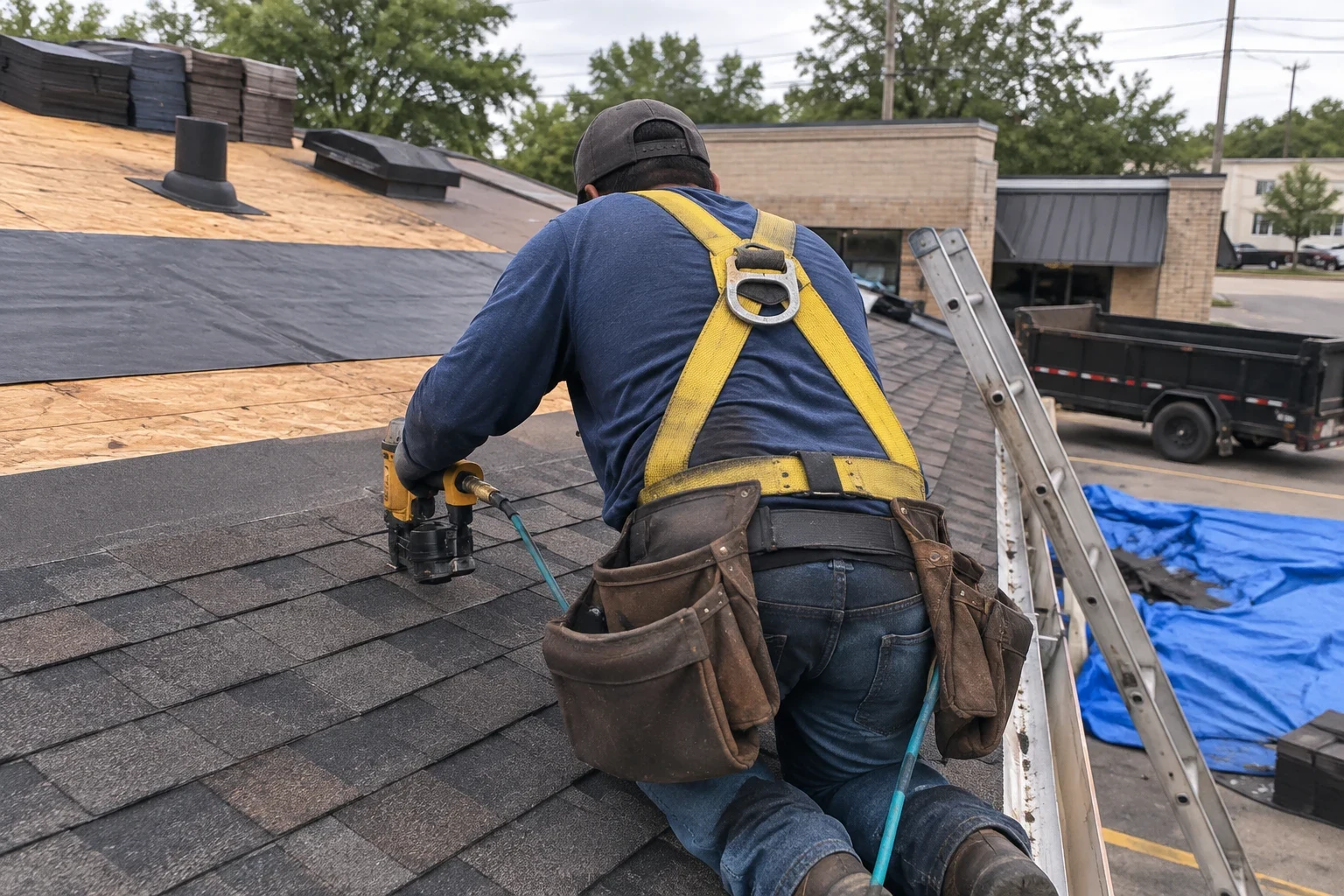
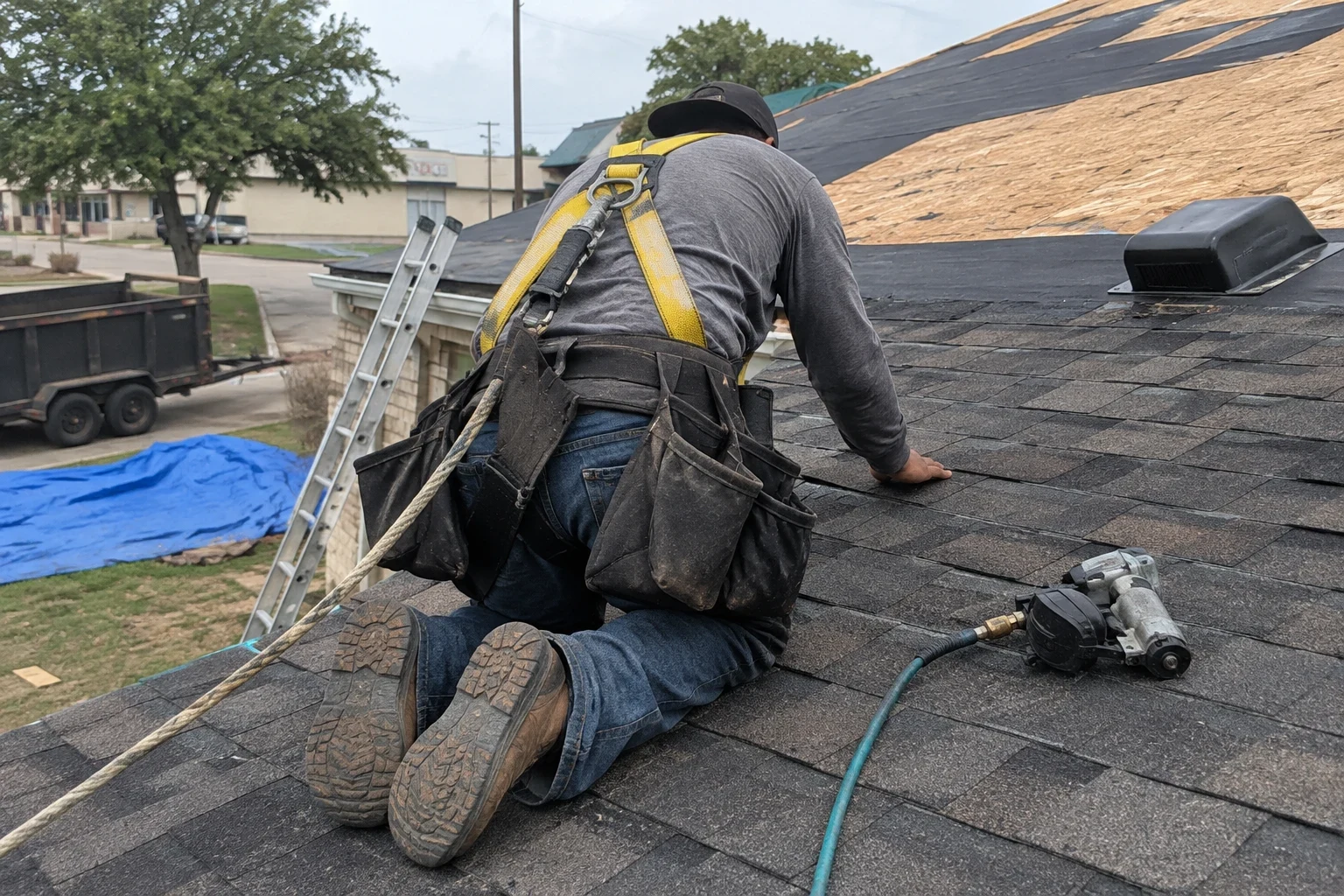
- Do you also handle the roof on commercial buildings?
- We do. Our commercial roofing work is its own service, and we can look at both while we are on site. That way one crew knows the whole building.
Let us look at your space
Tell us what you want to change and we will come walk it with you. You get a written estimate with the city steps laid out before any work starts.