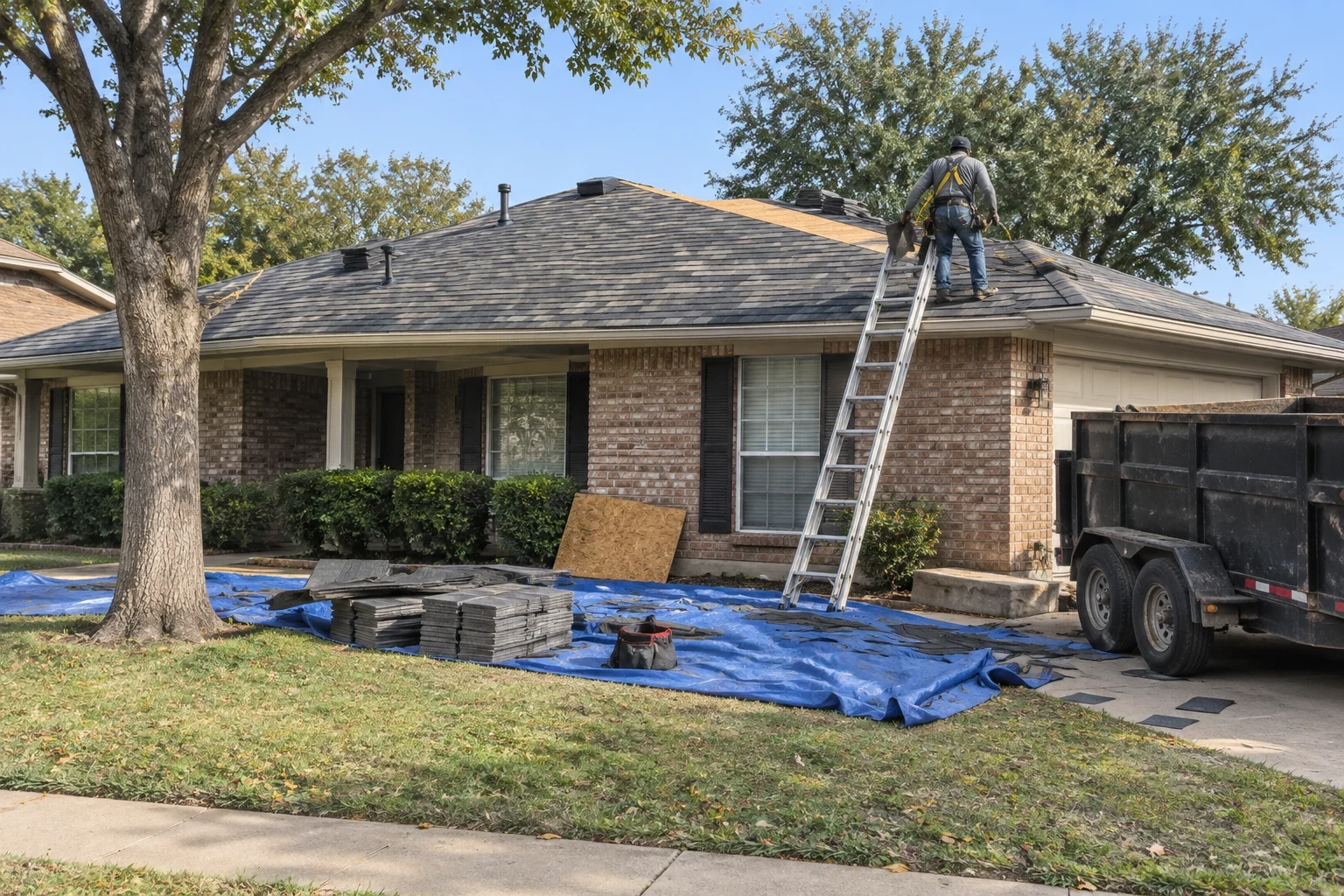
What Is the Best Roofing Material for a Home in Richardson?
Short version from someone who stands on these roofs: the right material depends on your roof's slope, your framing and how much hail you want to shrug off.
What is the best roofing material?
For most homes in Richardson, the best roofing material is an impact-rated architectural asphalt shingle. It handles North Texas hail and heat, fits most roof slopes, and meets code without extra framing. Standing seam metal is the step up if you plan to stay long term. Get a free estimate at (972) 433-9803.
Which roofing materials actually work on homes here?
Most homes around Richardson have pitched roofs, so you have more options than a flat-roofed building would. Each material has a job it does well and a place where it falls short.
Here is how we explain the main choices to homeowners on a first visit.
- Architectural asphalt shingles: thicker and heavier than old three-tab shingles, with better wind ratings. The most common choice on homes in the area.
- Impact-rated (Class 4) shingles: tested to take a steel ball dropped from height without cracking. They cost more than standard shingles but hold up better in hail.
- Standing seam metal: panels with raised seams and hidden fasteners. Sheds water fast, reflects heat and lasts a long time if installed right.
- Concrete or clay tile: very durable and good in heat, but heavy. Many homes need their framing checked before tile can go on.
- Synthetic slate or shake: made from composite materials, lighter than the real thing, with good impact ratings on many products.
How do hail and summer heat change the answer?
North Texas sits in one of the busiest hail areas in the country. Spring storms can bruise or crack standard shingles in a few minutes. That is why we usually steer people toward impact-rated shingles or metal before anything else.
Heat matters too. Long stretches of high temperatures dry out shingles and make them brittle over time. Lighter colors and reflective metal finishes keep the attic cooler, which can take some load off your air conditioning.
Some insurers in Texas offer a premium discount for a Class 4 roof. Ask your agent before you choose. We can tell you which products carry that rating, but your insurer decides what discount applies.
What do permits and building code say about your choice?
This is the part most people never hear about until something goes wrong. In Richardson, a new roof on a home generally needs a building permit, and the city checks the work against the residential building code it has adopted. The material you pick has to fit those rules, not just your taste.
A few code points come up on almost every job. None of them are hard to meet, but each one rules certain materials in or out for your roof.
- Roof slope: asphalt shingles are not allowed on roofs flatter than 2 in 12. Between 2 in 12 and 4 in 12, code calls for a double layer of underlayment.
- Low-slope sections: porch roofs and additions on older ranch homes are often too flat for shingles. Those areas need a membrane made for low slopes.
- Weight: tile can weigh several times more than shingles. The rafters and decking have to be able to carry it.
- Wind rating: shingles need to be rated for the wind speeds set for our area and nailed the way the maker specifies.
- Edges and flashing: drip edge, valley flashing and wall flashing are code items, and the city can flag them if they are missing.
- Layers: code limits how many layers can sit on a roof, and you cannot cover a roof that is wet or damaged.
What drives the cost of each material?
We will not quote a number in a blog post, because the roof itself sets the price. Two houses on the same street can come out very differently.
The material is one piece. The size and pitch of the roof, how many valleys and chimneys it has, the condition of the decking underneath, and how easy it is to get trucks and a dumpster close all move the total. Permit fees and any framing work for heavy materials go on top. We put each of those on a written, line-item estimate so you can see what you are paying for.
How do we help you pick the right one?
We start on the roof. We measure the slope, look at the decking from the attic where we can, and note any low-slope areas. Then we tell you which materials fit your home and the code, and which ones would need extra work.
If you live in a neighborhood with an HOA, check their rules early. We can give you product names and color samples to send in for approval. Once you choose, we pull the permit, schedule the city's inspection, and clean up nails and debris before we leave.
More questions about roofing materials
- Can my HOA stop me from using impact-rated shingles?
- Texas law limits an HOA's ability to ban shingles that are impact-resistant or energy efficient, as long as they look like what is allowed in the neighborhood. Your HOA can still review color and style, so send in samples first.
- Can metal go right over my old shingles?
- Code allows it only in limited cases, and the city has the final say on the permit. In most cases we recommend taking the old shingles off so we can check and fix the decking first.
- Does shingle color really make a difference?
- Yes, a little. Lighter colors reflect more sun and keep attic temperatures down in summer, though good attic ventilation does more of the work.
- Is the most expensive material always the best?
- No. Heavy tile on framing that was not built for it is a worse roof than good shingles installed to code. The best material is the one your roof can carry and that meets the rules.
Not sure which material fits your roof?
We will look at your roof's slope, decking and any low spots, then walk you through the materials that meet code for your home. You get a free estimate with every line item spelled out.